 TALLYA
Symbol dictionary · 11 min
Mandala symbols and meanings
Sixteen objects that recur in symbolic mandalas — the key, the door, the mirror, the thorn, the cup — what each has…
Forty flowers and what each has genuinely carried — where floriography came from, which meanings are documented, which were invented by dictionary compilers, and how to tell.
Ask what a flower means and you get a confident answer. Ask where the answer comes from and it usually turns out to be a website that copied another website.
Here is the real picture: a handful of flower meanings are genuinely ancient and stable, and most of the rest were assigned in the nineteenth century by people compiling books who disagreed with each other. Both halves are usable — but knowing which is which changes how much weight you put on them.
The language of flowers — floriography — was a European publishing phenomenon of the early nineteenth century. The founding text is usually given as Charlotte de Latour's Le langage des fleurs (Paris, 1819), and within a couple of decades there were dozens of imitators in French, English and German, each with its own list.
The story attached to it is that Victorians conducted secret courtships in bouquets, sending messages their chaperones could not read. It is a lovely story and the evidence for it is thin. What survives in quantity is the dictionaries, not the correspondence — which is a little like proving a language existed by pointing at its phrasebook.
What is solidly documented is that the books sold enormously and that giving flowers with intent became a parlour game and a social convention. The meanings were real in the way a shared convention is real: enough people had the same book for the gesture to land.
And the compilers disagreed. The same flower carries different meanings in different dictionaries, sometimes opposite ones, because when a compiler ran out of documented associations they filled the gaps by colour, by shape, by a line of poetry, or by whatever fitted the page. That is not a scandal. It is just worth knowing before treating any single list as authoritative.
These are the ones with real weight, because they turn up in more than one place and long before 1819.
Rosemary — remembrance. The oldest and most secure of them all. It appears in Hamlet ("there's rosemary, that's for remembrance") and was carried at both funerals and weddings across Europe for centuries. This is not a Victorian assignment; the Victorians inherited it.
The rose — love, and secrecy. The love meaning needs no explanation. The second is better: sub rosa, under the rose, meant a thing said in confidence, from the Roman practice of hanging a rose over a table where confidences were exchanged. A rose in a picture can mean either, and the good ones mean both.
The lily — purity, and death. The Madonna lily in Annunciation paintings is the fixed reference. Its funeral use is just as old, which gives the flower a doubleness most lists flatten out.
The poppy — sleep, and the dead. Opium made the first meaning literal. The second predates the First World War by millennia, though the war made it the dominant one in English.
The laurel — victory. Unbroken from the Greek games to the word laureate.
The violet — modesty, and faithfulness. Small, low, scented, hard to find. The association is so tied to the plant's habit that it arose independently in several places.
These are conventions rather than inheritances — which does not make them useless, only younger than they look.
Forget-me-not — remembrance in love. Reinforced by a German legend whose earliest tellings are, awkwardly, about as old as the flower dictionaries themselves. See forget-me-not.
Daffodil — self-regard, and new beginnings. Both from Narcissus, and the two pull against each other in a way the lists rarely admit. See the daffodil's mirror.
Tulip — a declaration. Assigned from a Persian romance by way of a Turkish courtship story, then hardened into "declaration of love" by repetition. See the tulip's confession.
Hyacinth — sorrow, or apology. From Apollo and Hyacinthus, where the flower springs from spilled blood. See the remembered hyacinth.
Peony — bashfulness, and the physician's hands. Named for Paeon, physician to the gods. The bashfulness is a Victorian addition; the medicine is Greek. See Paeon's peony.
Anemone — forsaken, and letting go. From the wind that opens and scatters it, which is one of the few dictionary meanings that argues from the plant's actual behaviour. See the windflower's letting go.
Iris — the messenger. Iris carried word between gods and mortals along the rainbow, and the flower took the name for its colours. See the rainbow-bridge iris.
The most durable meanings are not assigned at all — they are observed, and anyone can check them.
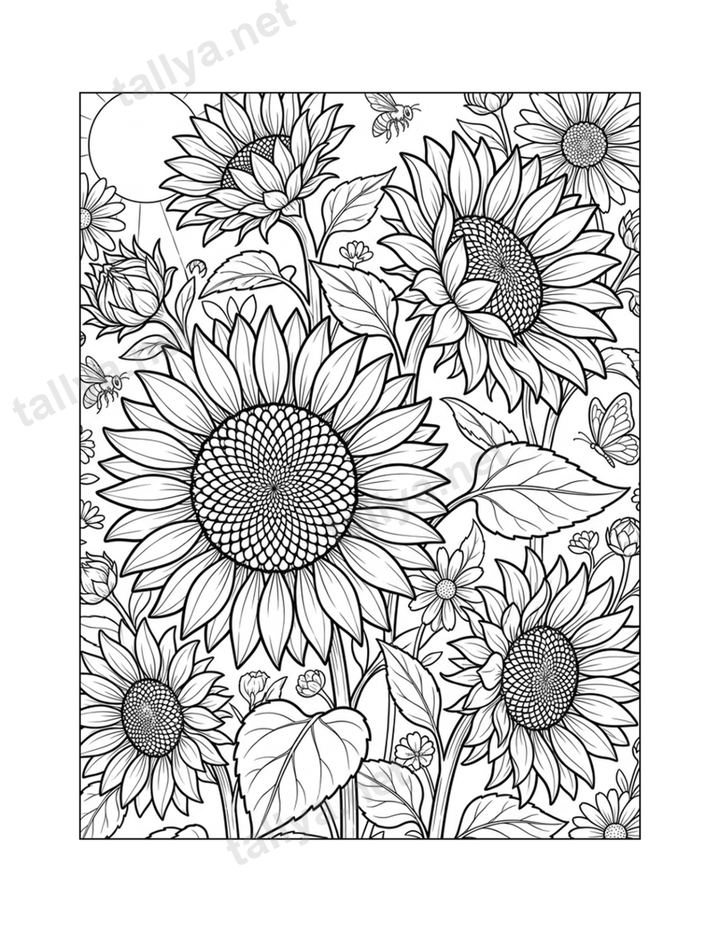
The sunflower tracks the sun while young and then, at maturity, stops and faces east for good. Every list knows the following; almost none knows the stopping, which is the more interesting half. See the sunflower's turn.
The snowdrop comes up through frozen ground before anything else, which is why it means return rather than hope — return is the harder and more specific claim. See the snowdrop's return.
The lotus roots in mud and opens clean above it, and it means roughly the same thing in Egyptian, Hindu and Buddhist use. When three unconnected traditions agree, the meaning is in the plant. See the whole-self lotus.
A meaning on its own is a label. What makes it do anything is position.
Put a flower in a radial composition and its distance from the centre becomes part of the message: at the rim it sets the situation, in the middle band it stands between you and the point, at the centre it is the point. The same forget-me-not means "this happened against a background of remembering" at the edge and "remembering is the whole subject" in the middle.
That is the mechanism behind a narrative mandala, and it is why our flower pages are composed rather than decorated. Mandala symbols and meanings covers the non-botanical vocabulary that goes with it.
All forty flowers, each with its documented meaning and its reading, are in What the Flowers Mean. Three are free to print.
Every page in the library is a narrative mandala printed with its own reading — what the objects are, where they sit, and what the arrangement is doing. 300 DPI, US Letter, half-inch margin. Pick any three.
Choose my free pages See the booksWhat do flowers mean?
It depends on who is asking and when. A few meanings are genuinely old and stable — the rose for love, the lily for purity, rosemary for remembrance. Most of the rest come from Victorian flower dictionaries whose compilers disagreed with each other and sometimes made assignments up to fill gaps.
Is the language of flowers real?
It was a real publishing craze and a real parlour game. Whether anyone conducted serious correspondence in it is much less certain — the surviving evidence is mostly the dictionaries themselves, which is a bit like proving a language exists by pointing at its phrasebook.
Which flower meanings are most reliable?
The ones that predate the dictionaries and turn up in more than one tradition: rosemary for remembrance, the rose for love, the lily for purity, the poppy for sleep and the dead, the laurel for victory. Those carry real weight because they were not assigned by one author.
How do I use flower meanings in art?
Choose the flower for what it carries and then let its position do the rest. In a radial composition, a flower at the rim sets the situation and the same flower at the centre becomes the subject — the meaning is only half the message.
Sixteen objects that recur in symbolic mandalas — the key, the door, the mirror, the thorn, the cup — what each has…
Mandala means circle in Sanskrit, but the word carries four different jobs across four traditions. Here is what each…
A narrative mandala keeps the circle and symmetry of a traditional mandala but fills them with nameable objects,…